
Reviewed · KAMPALA FOOD TOURS
Cooking Class for Typical Ugandan Food in Kampala
This Kampala class is interesting because you are not just watching food videos, you are working alongside a home cook and learning the plant to plate basics that make Ugandan meals feel normal and local. I love how small the group stays. I also like that it is vegetarian from start to finish, so you can focus on flavor, technique, and produce.
The potential drawback is simple: it is hands-on. You will peel, slice, and cook, so if you want a totally hands-off experience, this may feel a bit active.
Key things to know before you go
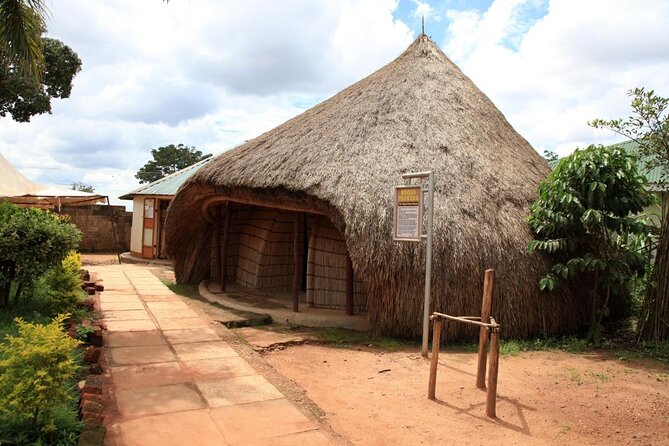
- Meet at Steve Residence (Nansana): Start from Little Muheji School Rd, then head to your host’s home for the workshop.
- Max 10 participants: This keeps the pace friendly and the coaching direct.
- Vegetarian Ugandan staples: Expect classic plant-based dishes like matooke using local produce.
- Native plants and banana leaves: You will learn what is used in everyday life, including banana leaves for traditional preparation.
- Sit-down meal after cooking: You eat what you helped make, so the class ends on a satisfying note.
- Weather matters: The experience requires good weather, and plans may shift if conditions are poor.
A half-day home kitchen class in Kampala
In Kampala, one of the best ways to understand a cuisine is to learn it from the inside. This cooking class takes you into a real home kitchen setting, where the work is practical and the talk is personal. You start with ingredients and end with a shared meal, so the experience connects the dots between what farmers grow, what home cooks use, and what ends up on a plate.
You are also getting more than recipes. You get context. The host, Gertrude, shares how plants show up in daily life, not just in meals. That kind of know-how is hard to pick up from a restaurant, and it is exactly the stuff you can carry home and use when you cook again.
And since the workshop caps at 10 participants, the class has breathing room. You are not lost in a crowd. You get the kind of attention that helps you understand what you are doing, even if you have never handled cassava or cooked matooke before.
Where else to eat in Kampala:
- Kampala: Three-Hour Food Tour
★ 4.6 · 15 reviews - Private Ugandan Food Cooking Class and Culture Experience
★ 5.0 · 6 reviews - Nighttime Boda Boda Street Food Tour
★ 5.0 · 6 reviews
Meeting point at Steve Residence and how the day flows
The class starts at Steve Residence, Little Muheji School Rd, Nansana, Uganda. That matters because it gives you a clear, easy anchor point to find before you head into the neighborhood for the workshop.
From there, the rhythm of the class is straightforward. You begin with introductions and a quick sense of what you will make. Then you move into prep work and cooking, guided by Gertrude. Near the end, you shift from kitchen work to relaxation, and you eat together at the end of the session.
Timing is part of the value here. The experience runs about 4 hours, which is long enough to learn real steps but short enough to fit into an active Kampala day. It is a true half-day plan.
A small practical note: the experience is near public transportation. That helps you build the rest of your itinerary without needing complicated logistics.
The hands-on prep: cassava, yams, pumpkin, and plantains
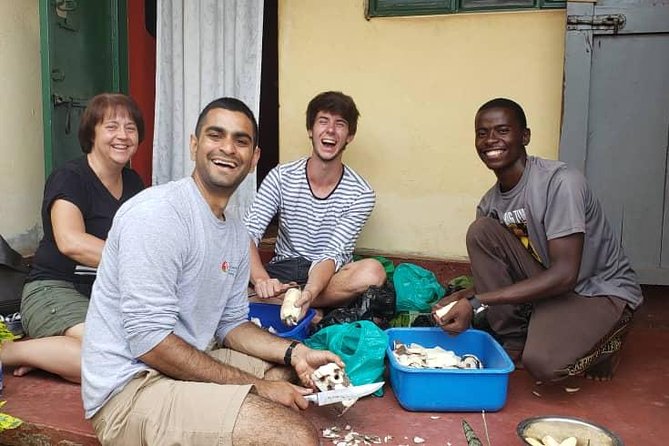
The core of the workshop is the prep. This is not a lecture class where you watch someone else do everything. You peel and slice local produce such as cassava, yams, pumpkin, and plantains as you assemble vegetarian staple dishes.
If you have never worked with these ingredients, the class gives you the transfer skills you need. You learn how they feel, how they behave in the kitchen, and how to handle them safely and comfortably. That is the kind of learning you cannot get from a cookbook page.
You also get to see how the same ingredient can lead to different textures and flavors depending on the method. Ugandan vegetarian food can feel surprisingly varied once you start breaking down the produce and watching it change as it cooks.
Learning Ugandan food beyond the plate, native plants included
One of the standout parts of this experience is the way Gertrude connects food to everyday life. You get to know native plants used in daily routines and then translate that knowledge into food prep.
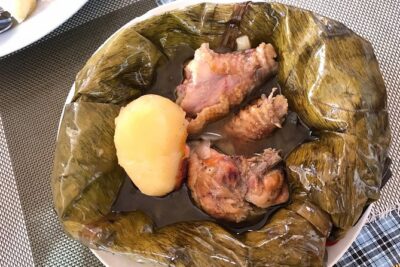
A big highlight here is banana leaves. You do not just hear the name. You learn how they are used in a traditional way, and that gives you a fuller picture of why Ugandan dishes can have that distinctive aroma and wrapped, steamed feel. If you are the type who likes to understand what gives a dish its signature character, this is the best section of the class.
This plant focus also makes the cooking feel grounded. You are not learning random steps. You are learning why local ingredients fit local cooking habits, including how foods are wrapped, processed, and served.
And yes, the vibe is warm. Gertrude shares stories while you cook, and there is often friendly cultural back-and-forth, including moments of dancing with her son. That is not just entertainment. It is part of the hospitality that makes the class feel like a visit, not a transaction.
More Kampala routes to compare
- Like a local cooking Tours
★ 4.0 · 4 reviews
Matooke and the vegetarian staples you’ll actually make
Vegetarian does not mean boring. In this class, you build and cook classic staples that rely on vegetables, starches, and sauces for their depth. Matooke is one of the dishes you assemble as part of the workshop, and it is a perfect example of technique-driven flavor.
Matooke is often linked with plantains, and that is exactly the kind of ingredient you will be handling during your prep time. Once you start working with plantains in the context of a traditional dish, matooke stops being an abstract name and becomes something you can picture and recreate later.
Along the way, you will also work with other local produce like cassava, yams, and pumpkin. That mix keeps the class balanced. You spend time peeling and prepping, then you spend time cooking and assembling, so the session never feels stuck in one phase.
The flavors that people keep mentioning: g-nut sauce and classic seasoning
A sauce can make or break a dish, and this workshop leans into that truth. One of the most memorable flavor notes from the class is the g-nut sauce. You may be preparing elements that lead into that peanut-based richness, and the result is the kind of local comfort flavor that makes you go back for more.
What I like about this is that it is not a sauce you need fancy ingredients for. Even if you cannot find every Ugandan product back home, you can often recreate the core idea of a peanut sauce and adjust it with the spices and greens you can access locally.
The practical win: you learn not only what it tastes like, but how it is approached in the kitchen. You watch how ingredients come together and how the vegetables work inside the overall flavor system.
Eating together in a Kampala home setting
The best part of a cooking class is what happens after the cooking, and here you do not stand around waiting for a meal you did not make. You sit down and relax as you enjoy the fruits of your labor.
That shared meal matters for two reasons. First, it lets you taste the dish with fresh context, because you just worked on it. Second, it turns the workshop into a complete experience, not just a cooking session. You end with something satisfying, and you leave knowing what the dishes are supposed to taste like when they are served traditionally.
One extra bonus that comes up: there is an amazing view from the place. If you like photo stops, this is the kind of setting that gives you natural photo opportunities while the food is cooking.
What you can recreate back home (and what to adjust)
The class is designed so you can recreate typical Ugandan food later. You come away with technique, not just a list of ingredients. That is important because Ugandan staples often depend on cooking habits: how long things cook, what gets wrapped, how sauces are built, and how produce is handled before heat.
When you cook again at home, you will likely need to adjust ingredients. Cassava, certain plantain types, and banana leaves can be tricky depending on where you live. But the skills you learn still travel well.
Here is the realistic approach I recommend:
- Use local substitutes for produce if you cannot source the exact ingredient.
- Aim to keep the cooking technique close to what you learned, especially for starches and the feel of the sauce.
- Treat the plant-based menu as a framework, not a limitation.
Because it is vegetarian, you can also plan the dishes around your own dietary preferences without needing to restructure the entire meal.
Price, value, and what $32 gets you in Kampala
At $32 per person for about 4 hours, you are paying for more than instruction. You are paying for the combination of small group time, ingredient prep, hands-on coaching, and a sit-down meal that comes directly from the cooking.
For me, the value rests on three things:
- The group size is capped at 10, so the experience does not feel rushed.
- It is a home setting, so you get authentic context, not just a demo kitchen vibe.
- You get a full workflow, from peeling and slicing to assembling staple dishes and then eating the result.
Also, the workshop is often booked around 8 days in advance on average. That is a sign of demand. If Kampala is busy for you, lock in your slot earlier rather than later.
Who this class suits best, and who should think twice
This is a great fit if you want a hands-on Kampala food experience that stays practical. You will enjoy it if you like learning how local ingredients are handled, and if you appreciate a warm host who explains the why behind the steps.
It is also a strong choice if you eat vegetarian or want to explore plant-based Ugandan food without the complication of meat-based cooking.
It might be less ideal if you prefer food experiences where you only observe. This workshop includes active prep like peeling and slicing. It is also weather sensitive, since the experience requires good weather.
FAQ
Where is the cooking class located in Kampala?
It meets at Steve Residence, Little Muheji School Rd, Nansana, Uganda, and it ends back at the meeting point.
How long is the cooking class?
The duration is about 4 hours.
What is the price per person?
The price is $32.00 per person.
How big are the groups?
The workshop has a maximum of 10 travelers, for a small-group experience.
Is the class vegetarian?
Yes. The cooking is purely vegetarian, and you prepare traditional plant-based dishes.
Do I get to eat the food I help cook?
Yes. You sit down and enjoy a meal based on traditional vegetarian recipes.
When will I receive confirmation after booking?
Confirmation is received at the time of booking.
What is the cancellation policy?
Free cancellation is available. You can cancel up to 24 hours in advance for a full refund.
Should you book this Ugandan cooking class?
If you want an authentic Kampala food experience that feels like visiting a friendly home, I think this is a smart booking. The small group size, the focus on real prep work, and the chance to learn traditional uses like banana leaves make it more than a quick meal. The $32 price also feels fair for a half-day that ends with what you cooked.
Book it when you can count on good weather, and go in ready to get your hands busy.
More Workshops in Kampala
- Kampala: Hands-On Chocolate Making Experience
★ 4.9 · 18 reviews
More Food & Drink in Kampala
- Fishing Village Food Tour & Luwombo Stop
★ 5.0 · 3 reviews
Just reviewed in Kampala
- 3 Days Murchison Falls Wildlife Safari★ 4.5 · 3 reviews
- 4-Day QENP, Gorillas in Bwindi and Lake Bunyonyi relaxation★ 5.0 · 3 reviews
- Kampala: Luxury City Tour with Hotel Pickup and Drop-Off★ 5.0 · 3 reviews
- 3 Days Private Tour in Murchison Falls National Park★ 5.0 · 3 reviews
- Exploring The Mighty Falls In Uganda★ 5.0 · 3 reviews
- Fishing Village Food Tour & Luwombo Stop★ 5.0 · 3 reviews
- 5 days gorillas and chimpanzee tracking★ 4.5 · 3 reviews
- Mountain Rwenzori Trekking Uganda 9 Day Safari★ 4.5 · 3 reviews
Kampala Food Tours, compared.
Private Ugandan Food Cooking Class and Culture Experience
Read our review →
Browse the lists this tour appears in