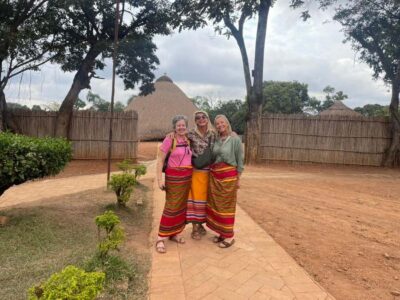
Kampala on foot is interesting because the city feels like it is in motion all the time, and you get to see how people actually shop, ride, and socialize in real neighborhoods. I like the mix of markets and monuments in just three hours, plus the way guides help you read what you are seeing without turning it into a lecture. You will also appreciate the small group vibe, which keeps things flexible.
Two things I especially like: you start with stops like Independence and the World War Memorial that give context fast, then you move into everyday Kampala at Nakasero Market, Old Taxi Park, and Owino Market. In recent departures, guides such as Abdul and Pius have led groups, and the common thread is clear communication plus time for questions.
One drawback to plan for: this is real city walking, with crowds, uneven pavement, and some hills. It is also not a great fit for people with mobility impairments, and you will want comfortable shoes and sun protection.
Key Highlights You’ll Feel Immediately
- Small group size (max 6) means the pace is flexible and your guide can respond to your questions.
- English-speaking guide helps you make sense of Kampala fast, from markets to monuments.
- Independence Monument and the World War Memorial give strong historical context in a short walk.
- Owino Market (St. Balikuddembe Market) is huge, with around 50,000 traders, so it is a full sensory experience.
- Old Taxi Park shows how matatus move people through the city.
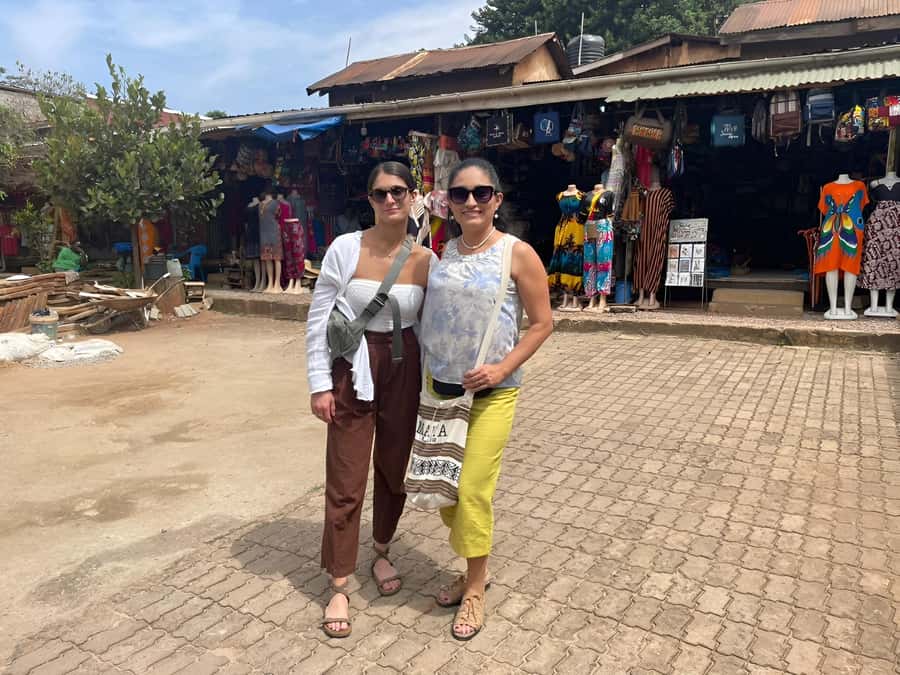
- Markets you can shop at like Bagala Craft, Nakasero, and Owino, with guidance for navigating prices.
Getting Your Bearings in Central Kampala in Only 3 Hours
This tour is built for travelers who want the “real city” feeling quickly, without spending a whole day in transit or guessing where to go. You meet at Kitenji Uganda Safaris and Tours, then you get a short orientation so you know what neighborhoods you are moving through and why each stop matters.
The best part of a tight schedule is focus. In three hours you hit the kind of landmarks that explain Uganda’s story, then you immediately switch gears into daily life at markets and transport hubs. It can feel like two Kampala chapters back to back, history on one side, commerce and street culture on the other.
Because this is walking, the practical details matter. Plan for sun and heat, and expect some uphill stretches. Many city streets are busy and loud, so you will rely on your guide for safer crossings and for keeping the group together when traffic and crowds surge.
More Kampala routes to compare
- Kampala’s Best Experience walking tour
★ 5.0 · 137 reviews - Kampala Walking City Tours (Women Guided)
★ 5.0 · 115 reviews - Kampala Walking Tour (3 Hours) with Optional Gaddafi Mosque Visit
★ 5.0 · 112 reviews
Bagala Craft Market: Buying Souvenirs With Context
Your first market stop, Bagala Craft Market, is where you can turn “I saw it” into “I understand it.” It is a go-to place for locally made art, jewellery, textiles, and other handicrafts, and the point is not just shopping. The guide helps you engage with artisans and choose pieces that feel meaningful rather than random.
What I like about this stop is the way it sets the tone. You start with something tangible and slower than the big markets later on. If you are the type who hates last-minute souvenir scrambling, this is a smart early move.
Do not expect everything to be card-friendly. The tour guide tip is simple: carry some Ugandan Shillings in case smaller sellers want cash. Also, set a budget before you arrive, because markets are made for impulse buying.
Constitutional Square and Independence Monument: A Photo Stop With Meaning
Next you head to Constitutional Square, then to the Independence Monument. This is a quieter, reflective area, set in a garden setting that makes it easier to pause for photos and take the story in.
The Independence Monument commemorates Uganda’s independence from British colonial rule in 1962. You do not just look at stonework here. You get the context for why this kind of monument sits at the center of public memory, and why that matters when you move from formal history into the bustle of markets.
This portion is also short, which is exactly what you want if you only have a few hours. Fifteen to twenty minutes gives you enough time to understand the basics, take pictures, and then keep the walking momentum.
World War Memorial: One of Kampala’s Older Reminders
A short walk from the Independence area brings you to the World War Memorial, built in 1945 by the British colonial government. It commemorates Ugandans who died supporting British soldiers during World War I and World War II, and it is described as one of the oldest monuments in Kampala.
This stop works because it breaks the pattern of “all monuments are the same.” Here the guide can point out how layered memory can be, especially in cities where colonial history and local identity overlap. Even if monuments are not your thing, this one is worth a pause because it connects Uganda’s past to a wider international story without pretending the connection is simple.
Give yourself a moment to stand back and look around. A memorial like this can feel heavy when you are tired from market noise, but that is also when it lands best.
A lighter day either side of Kampala:
- 3 Hours Guided Cycling Tour Across Lake Victoria
★ 5.0 · 151 reviews - 3 Days gorilla trekking Safari tour in Uganda
★ 5.0 · 121 reviews - Lake Victoria Island Cycling Tour from Kampala
★ 5.0 · 120 reviews - Steve Kampala Walking tours (Airpals Safaris tour)
★ 5.0 · 89 reviews
A Local Café Break: Recharge Without Losing the Route
The tour includes a short break at a local café. Meals are not included, but this pause gives your feet a breather and your head a reset before the bigger market stops.
In a place like Kampala, a break is not optional. Heat, crowds, and constant motion add up fast. Even if you only drink water or grab something light, that small pause can help you keep your energy for Owino Market later.
Nakasero Market: Fresh Produce, Spices, and Real-Day Commerce
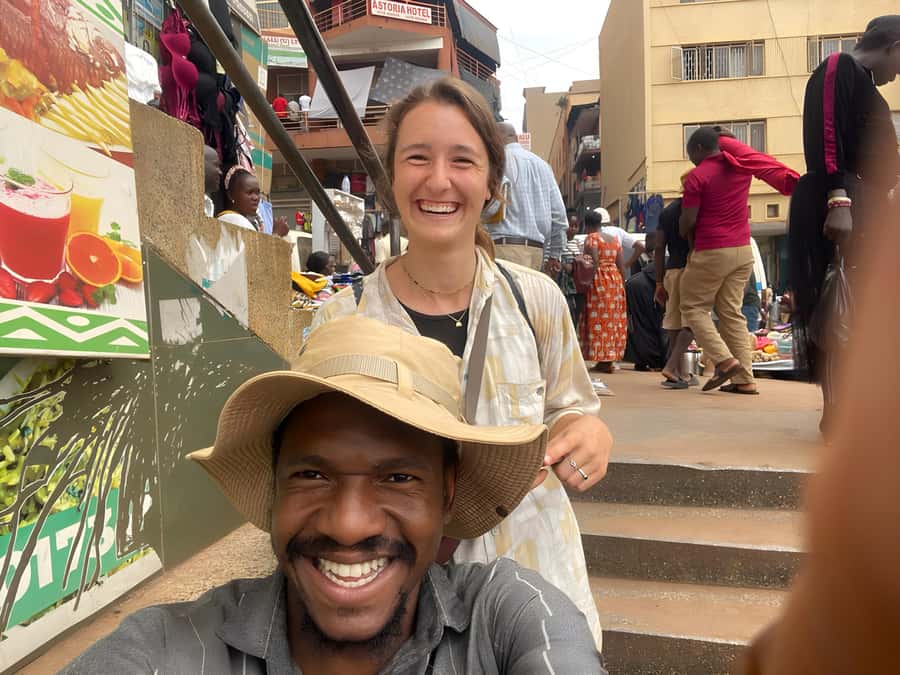
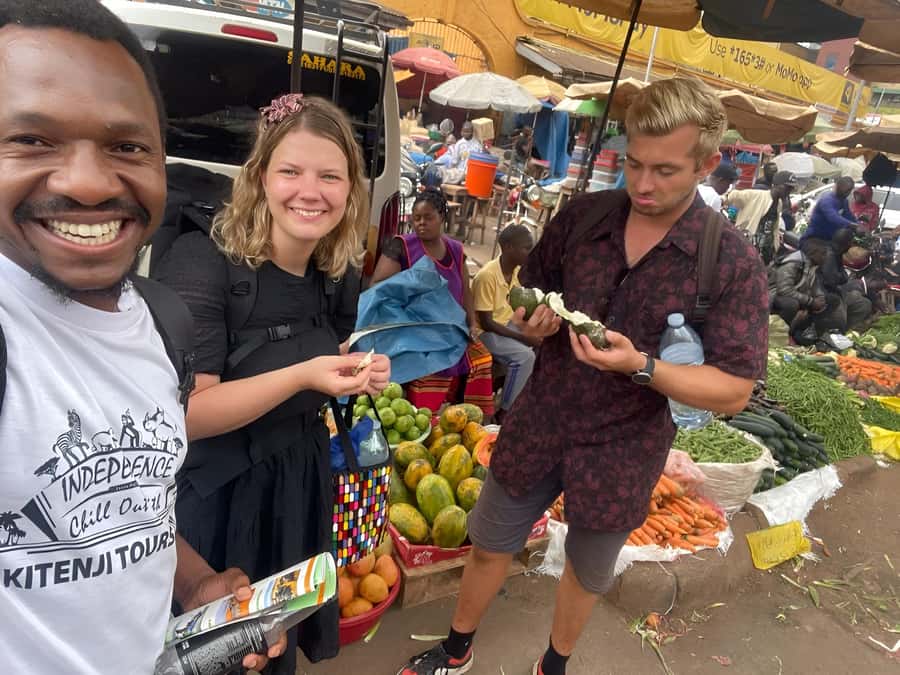
Then you move into Nakasero Market, a central hub for fresh produce. The draw here is watching day-to-day business at work: fruits and vegetables, spices, and the constant back-and-forth between buyers and sellers.
This is one of the most practical stops on the route because you can see how people eat and cook locally without a formal “food experience.” If you have ever tried to understand a country through dishes on a menu, this is the more grounded version.
A quick note on comfort: markets mean standing, walking on uneven ground, and weaving around people carrying goods. Comfortable shoes are not a suggestion here. They are the difference between enjoying the chaos and counting minutes until you sit down.
Old Taxi Park: The Soundtrack of Kampala (And How to Cross It)
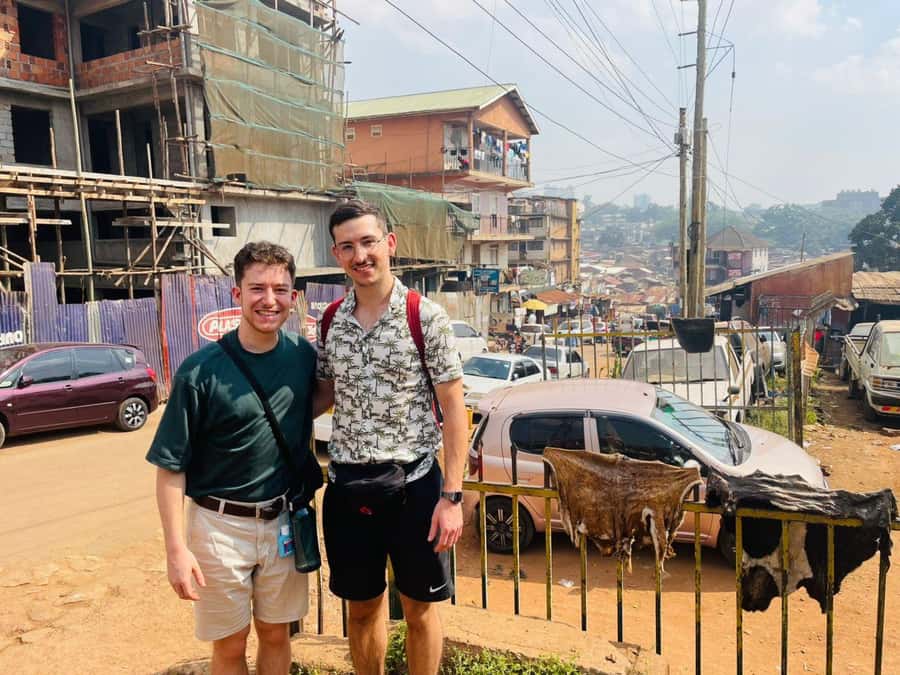
Old Taxi Park is one of the most “Kampala” places on this route. It is a cornerstone of the city’s public transport system, and the energy comes from the matatus, shared taxis, moving passengers in a constant cycle of arrival and departure.
What makes this stop valuable is that it is not just sightseeing from the sidewalk. Your guide can help you observe how the system works, where people line up, and how you should behave around traffic. In one helpful story from a recent group, the guide showed how to cross Kampala’s busy roads calmly and safely, which is the kind of street skill that is hard to learn from a guidebook.
Expect noise. Expect lots of movement. If you get overwhelmed easily, give yourself a few seconds between moments so you can take it in without feeling rushed.
Owino Market (St. Balikuddembe): The Big One You Remember
Finally, you hit Owino Market (St. Balikuddembe Market), often called the beating heart of Kampala. The scale is the first thing that hits you: the market hosts around 50,000 traders.
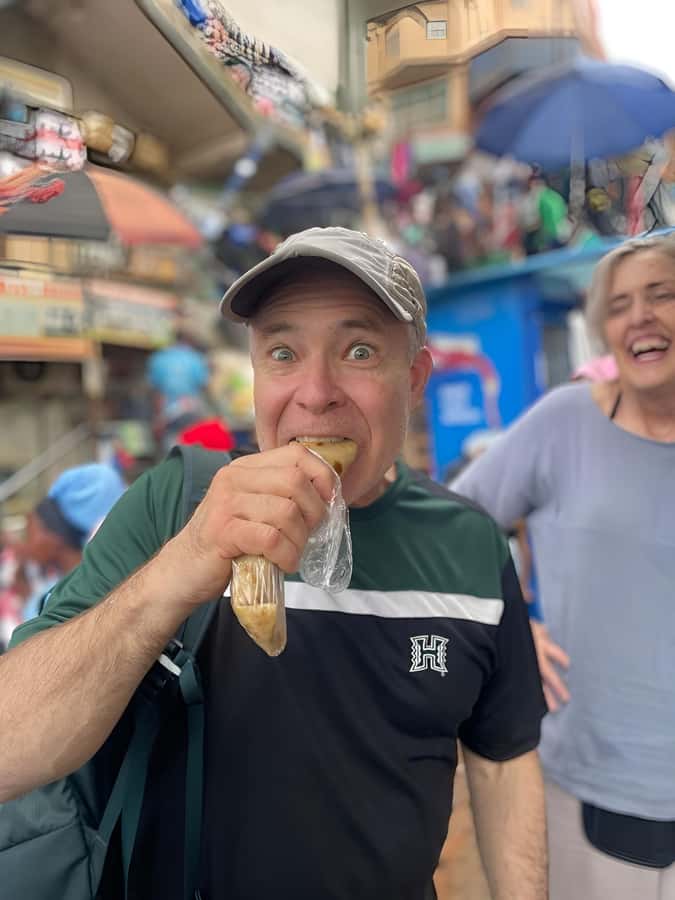
This is where shopping becomes people-watching. You will see everything from produce to crafts, and the place runs on smell, sound, and color. Spices hang in the air. Textiles and fruits create constant color blocks. It is sensory overload, but that is also why it is so memorable.
The best way to enjoy Owino is to go with two goals:
- Find something small you can bring home.
- Ask your guide questions about what you are seeing, not just how to buy.
Your guide can also help with negotiation and purchases, which makes a big difference when you are surrounded by strong personalities and fast sales talk. If you like to avoid stress, this is the stop where having a helper matters most.
Owino is also the part of the route where you might feel the “three hours is not a lot” truth. You will not cover every aisle. That said, you will leave with a clear sense of what the market is like and how locals use it.
Small Group Size (Up to 6) and Why It Changes Everything
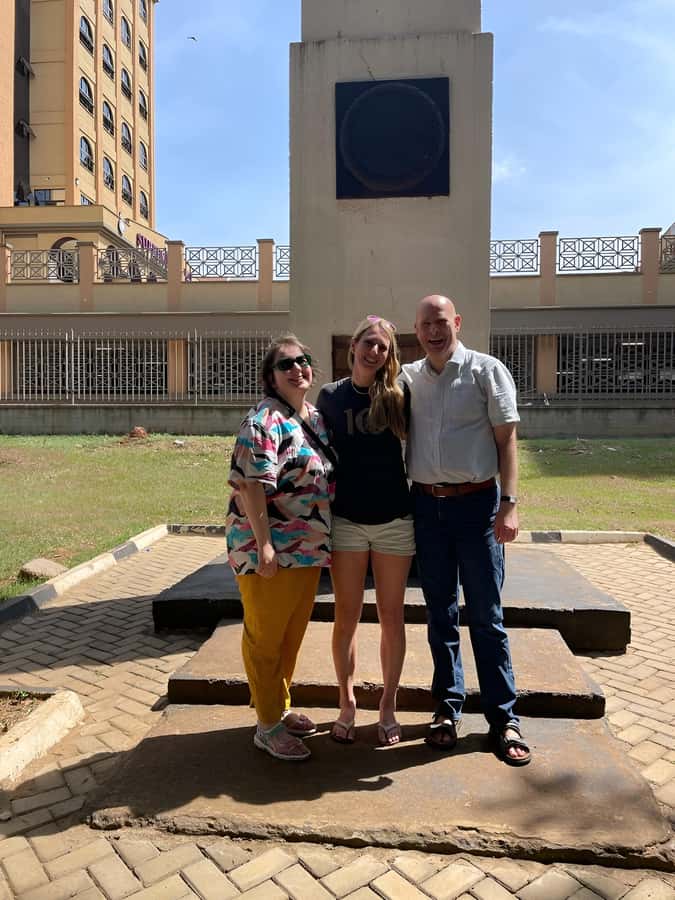
The tour runs as a small group, limited to 6 participants, and that is not just a comfort detail. It changes the whole experience.
With fewer people, your guide can:
- keep a more consistent pace,
- stop to answer questions without losing the group,
- adjust the route if you want more time in a market or fewer stops at a monument.
It also makes safety easier. In busy areas like taxi parks and market entrances, staying together is the whole game. A larger group can feel like a moving crowd. A small group feels more like walking with a local friend who knows how to time the crossings.
From past departures, guides have shown they will adapt to your preferences. Some groups got extra attention to topics like politics, mosques, and how markets shape everyday life. If you care about how society works, you will probably appreciate this.
Price and Value: Why $22 Works Here
At $22 per person for a 3-hour guided walk, the value is in two places: a professional guide and multiple paid stops. Admission is included for Owino Market, Old Taxi Park, Nakasero Market, Independence Monument, and Bagala Craft Market.
If you try to do this on your own, the costs add up quickly. You may pay for entry at monuments or markets, and you still need local guidance to navigate crowds, crossings, and the practical rhythm of transport hubs. Here you get that support in one bundled route.
Also, the schedule is efficient. You do not spend the day hopping between unrelated sights. The route is designed to connect the “why” of history with the “how” of daily life.
Practical Tips for Walking in Kampala
If you want this tour to feel fun instead of tiring, plan for comfort and weather.
- Wear comfortable shoes. You are on your feet for long stretches.
- Protect against the sun: hat, sunglasses, sunscreen, and think about shade when you can.
- Bring a water bottle. The pace plus heat can surprise you.
- Carry some Ugandan Shillings, especially for small vendors who may not take card payments.
- Plan your personal pace. The tour is flexible, so you can pause for photos or questions without the whole schedule collapsing.
One more practical thing: this is not a sit-and-stare museum day. It is a walking city day. If you pack light and move confidently, you get more out of each stop.
Who This Tour Suits Best
This Kampala walking tour is a strong fit if you:
- want a first orientation to the city in a short time,
- enjoy markets and street life as much as monuments,
- like having an English-speaking guide to explain what you are looking at,
- prefer a small group over crowded buses.
It might not be your best match if you:
- need step-free routes or have mobility challenges,
- want a quiet, low-stimulation experience with minimal crowds,
- plan to do heavy shopping and bargain for hours. You can buy items, but the tour time is tight, so use it for smart picks, not marathon hagglers.
Should You Book This Kampala Walking Tour?
If you are short on time and want a real introduction to Kampala, I think this is an easy yes. The combination of Independence and the World War Memorial with the everyday reality of Bagala Craft, Nakasero Market, Old Taxi Park, and Owino Market makes the three hours feel worthwhile.
I would book if you want help navigating crowds and crossing busy streets, and if you like asking questions and learning how the city works day to day. If you are sensitive to heat, noise, and walking, you might need to adjust your expectations or consider a gentler option.
FAQ
How long is the Kampala walking tour?
The tour lasts approximately 3 hours.
What time does the tour run?
It is available between 9 am and 7 pm. After booking, an agent will confirm your preferred start time.
Where does the tour start?
You start at Kitenji Uganda Safaris and Tours.
Is this a small group tour?
Yes. The group is limited to 6 participants.
What’s included in the tour price?
A professional English-speaking guide is included, along with admission for Owino Market, Old Taxi Park, Nakasero market, Independence Monument, and Bagala craft market.
Is the guide English-speaking?
Yes. The tour includes an English-speaking live guide.
Does the tour include pickup and drop-off?
No. Pick up and drop off are not included.
What should I bring for the walk?
Bring comfortable shoes. You should also protect against the sun and stay hydrated. It helps to carry some Ugandan Shillings for smaller vendors.
Is there free cancellation?
Yes. You can cancel up to 24 hours in advance for a full refund.
Is the tour suitable for people with mobility impairments?
No. The tour is not suitable for people with mobility impairments.
Just reviewed in Kampala
- 3 Days Murchison Falls Wildlife Safari★ 4.5 · 3 reviews
- 4-Day QENP, Gorillas in Bwindi and Lake Bunyonyi relaxation★ 5.0 · 3 reviews
- 3 Days Private Tour in Murchison Falls National Park★ 5.0 · 3 reviews
- Kampala: Luxury City Tour with Hotel Pickup and Drop-Off★ 5.0 · 3 reviews
- Exploring The Mighty Falls In Uganda★ 5.0 · 3 reviews
- Fishing Village Food Tour & Luwombo Stop★ 5.0 · 3 reviews
- 5 days gorillas and chimpanzee tracking★ 4.5 · 3 reviews
- Mountain Rwenzori Trekking Uganda 9 Day Safari★ 4.5 · 3 reviews